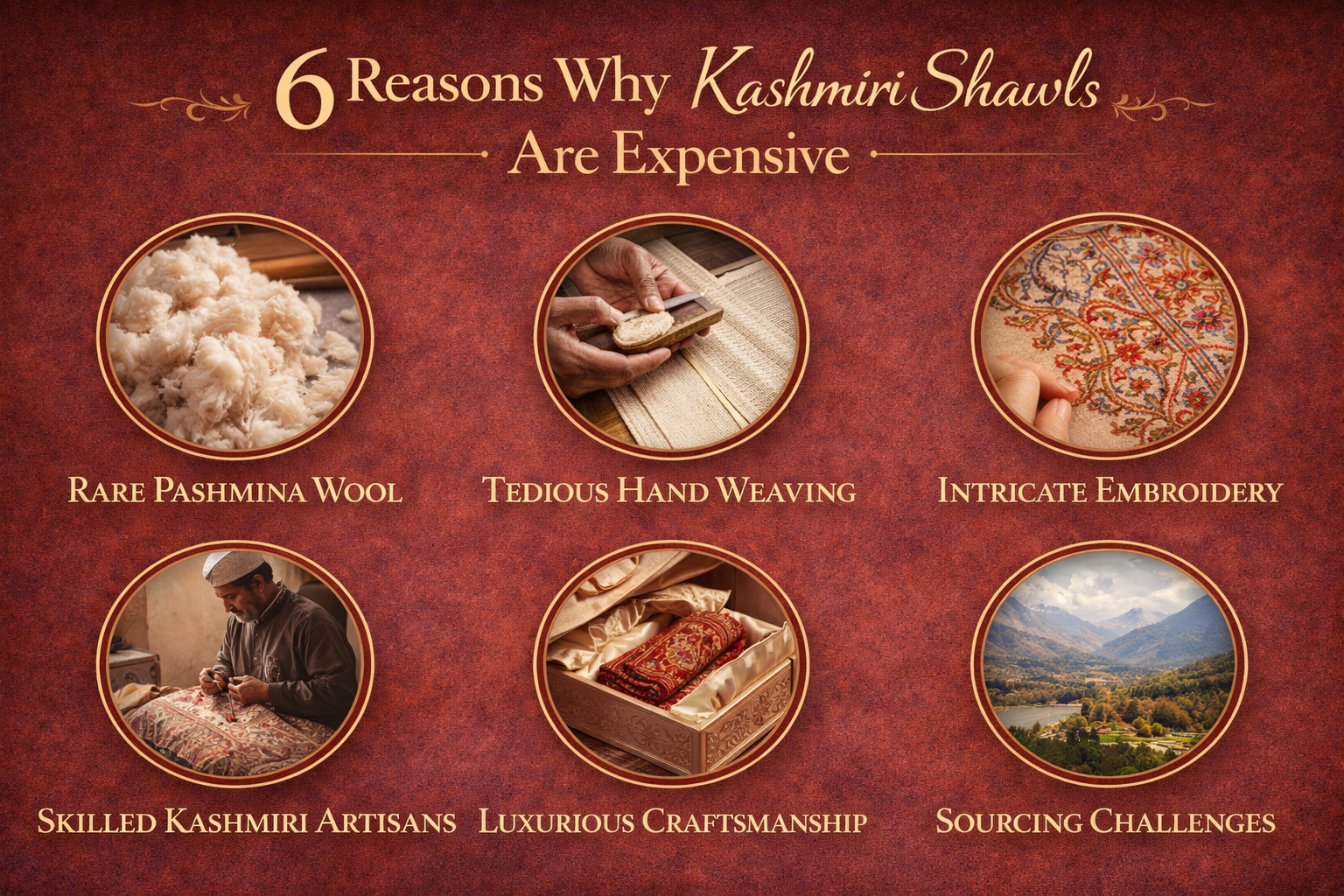
6 Reasons Why Kashmiri Shawls Are Expensive
When people explore premium winter textiles, two questions often come up: Is Pashmina warm? and why are Kashmiri shawls so expensive?
The answer to both lies in material rarity, craftsmanship, and performance.
A genuine Kashmiri Pashmina shawl is not simply a winter accessory.
It is the result of rare natural fiber, meticulous handwork, and generations of textile tradition.
Understanding what makes Pashmina cloth unique helps explain both its warmth and its price.
1. Rare Natural Fiber from High Altitudes
To understand the cost, you must first understand the material.
Pashmina is derived from the ultra-fine undercoat of the Changthangi goat, native to extreme Himalayan climates.
These goats develop a soft inner layer to survive freezing temperatures. That fiber becomes the base of warm Pashmina shawls.
Each goat produces only a small quantity of usable fiber annually. After sorting and cleaning, even less remains for weaving. This limited yield significantly impacts supply.
So when someone asks, is Pashmina warm?
Your answer should always be: Yes, because it is designed by nature to withstand harsh mountain winters.
The warmth is not synthetic. It is biological insulation refined into textile form.
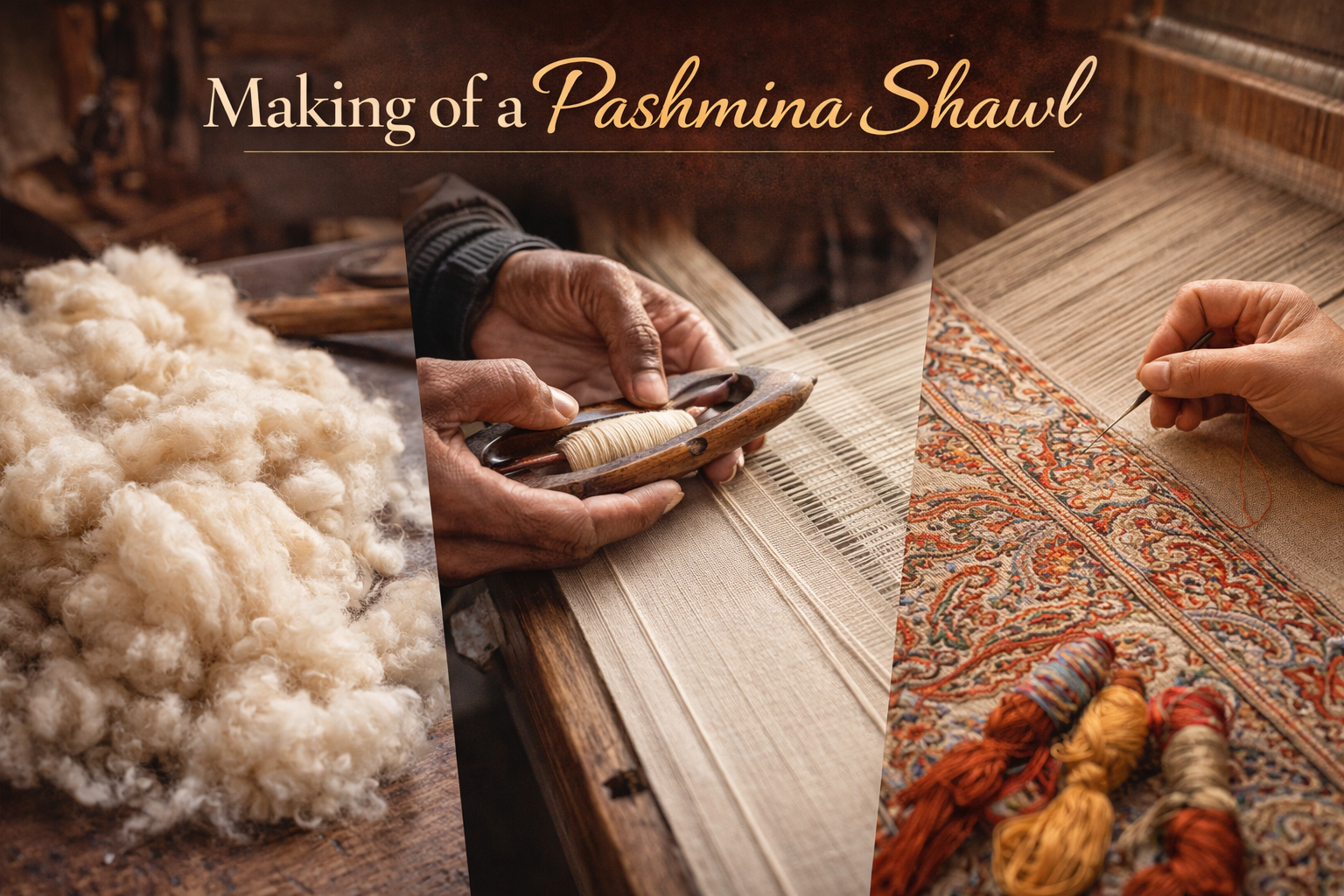
2. Labor-Intensive Fiber Processing
Raw Pashmina fiber cannot be used immediately. It must be:
-
Cleaned thoroughly
-
Hand-sorted to remove coarse hairs
-
Carefully separated into ultra-fine strands
This stage requires skill and time. Machine shortcuts can damage the softness of the fiber, which is why authentic producers rely on manual methods.
The cost of this careful preparation is built into every finished shawl.
3. Hand-Spinning Preserves Softness
One of the most defining characteristics of premium Pashmina cloth is its softness. That softness depends on how the yarn is spun.
Traditional hand-spinning prevents excessive tension on delicate fibers. Machine-spinning, while faster, can reduce fiber integrity.
Because the yarn is spun slowly and carefully, it retains:
-
Natural softness
-
Breathability
-
Insulating strength
This is why warm Pashmina feels lightweight yet protective.
4. Slow and Skilled Weaving
Once spun, the yarn is woven into fabric on traditional looms. Even plain shawls require focused attention and time. More detailed designs require significantly longer production periods.
Unlike factory textiles, Kashmiri shawls are not mass-produced at speed. Each piece passes through skilled hands.
The weaving stage affects:
-
Drape
-
Texture consistency
-
Overall durability
-
Insulation density
This deliberate craftsmanship adds cost and value.
5. Superior Warmth Without Bulk
Many people searching “is Pashmina warm?” are comparing it to wool or synthetic winter wraps.
The answer is yes, but what makes it exceptional is how it delivers warmth.
A warm Pashmina shawl:
-
Traps heat efficiently
-
Remains breathable
-
Feels light on the shoulders
-
Avoids the heaviness of thick wool
Because Pashmina fibers are extremely fine, they create a high warmth-to-weight ratio. You stay insulated without feeling weighed down.
This performance quality makes authentic Pashmina more valuable than standard woolen shawls.
6. Longevity and Investment Value
A well-made Kashmiri shawl does not lose relevance after one season.
With proper care, it maintains softness and structure for years.
Unlike cheaper fabrics that pill excessively or flatten over time, high-quality Pashmina cloth ages gracefully.
When evaluating price, consider longevity:
-
Long-term durability
-
Timeless aesthetic
-
Multi-occasion wearability
-
Investment value
The cost reflects not only material and labor but also lifespan.
So, Is Pashmina Warm Enough for Winter?
Yes, genuine Pashmina provides warmth and natural insulation derived from extreme Himalayan climates.
However, its warmth is balanced with breathability.
That is why it works for:
-
Outdoor winter evenings
-
Indoor formal events
-
Travel layering
-
Transitional climates
Warmth is refined, not bulky. Comfortable, not heavy.
Explore Authentic Kashmiri Shawls at Pashmoda
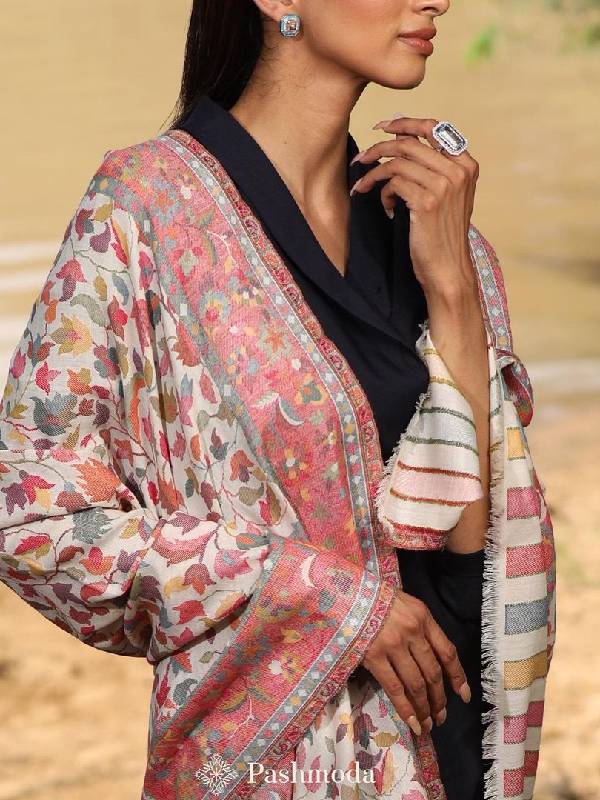
Pashmoda Kashmiri Shawl Collection
Now that you understand why Kashmiri shawls command a premium price, the difference becomes clear.
You are not paying for branding. You are investing in rare fiber, skilled weaving, and enduring warmth.
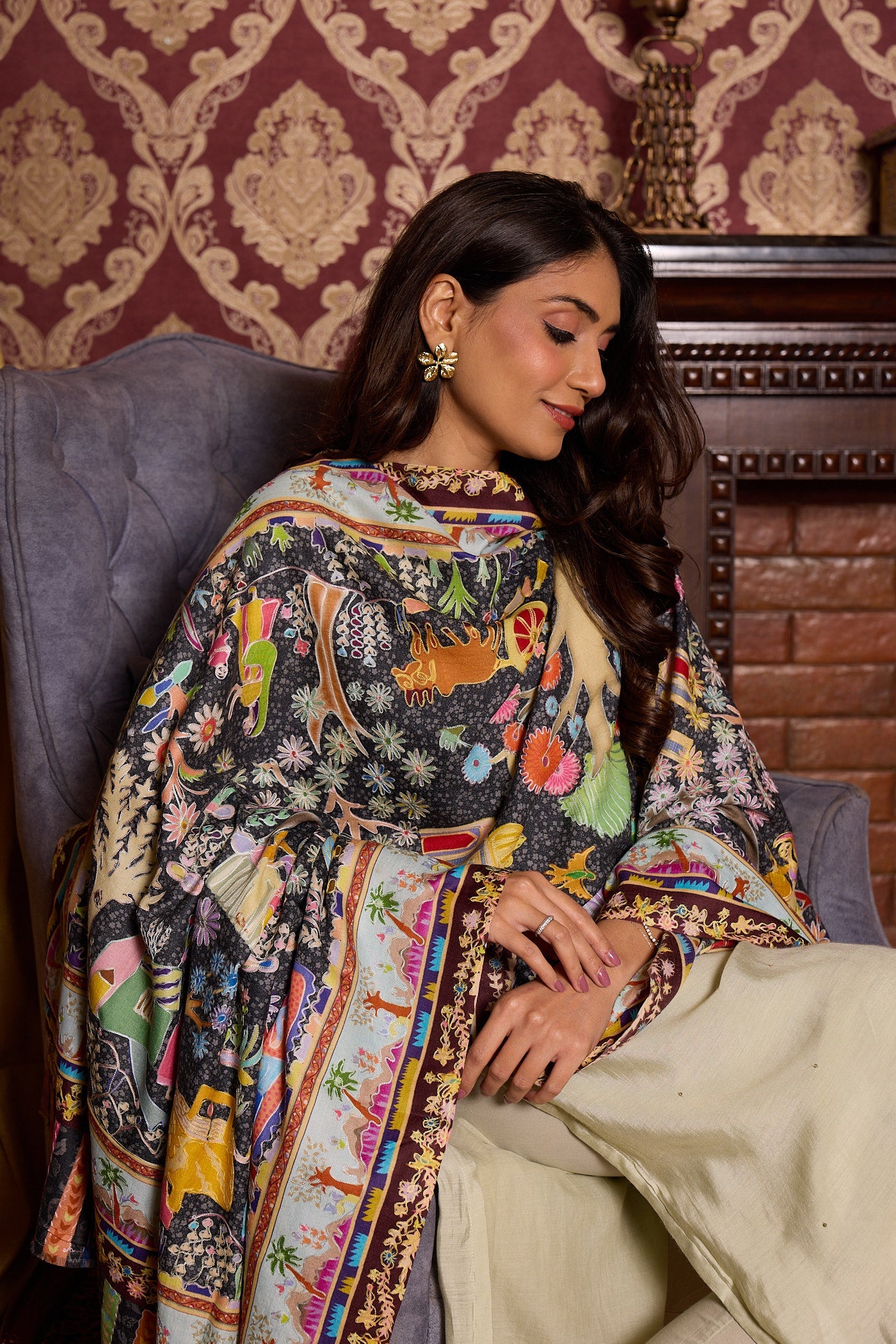
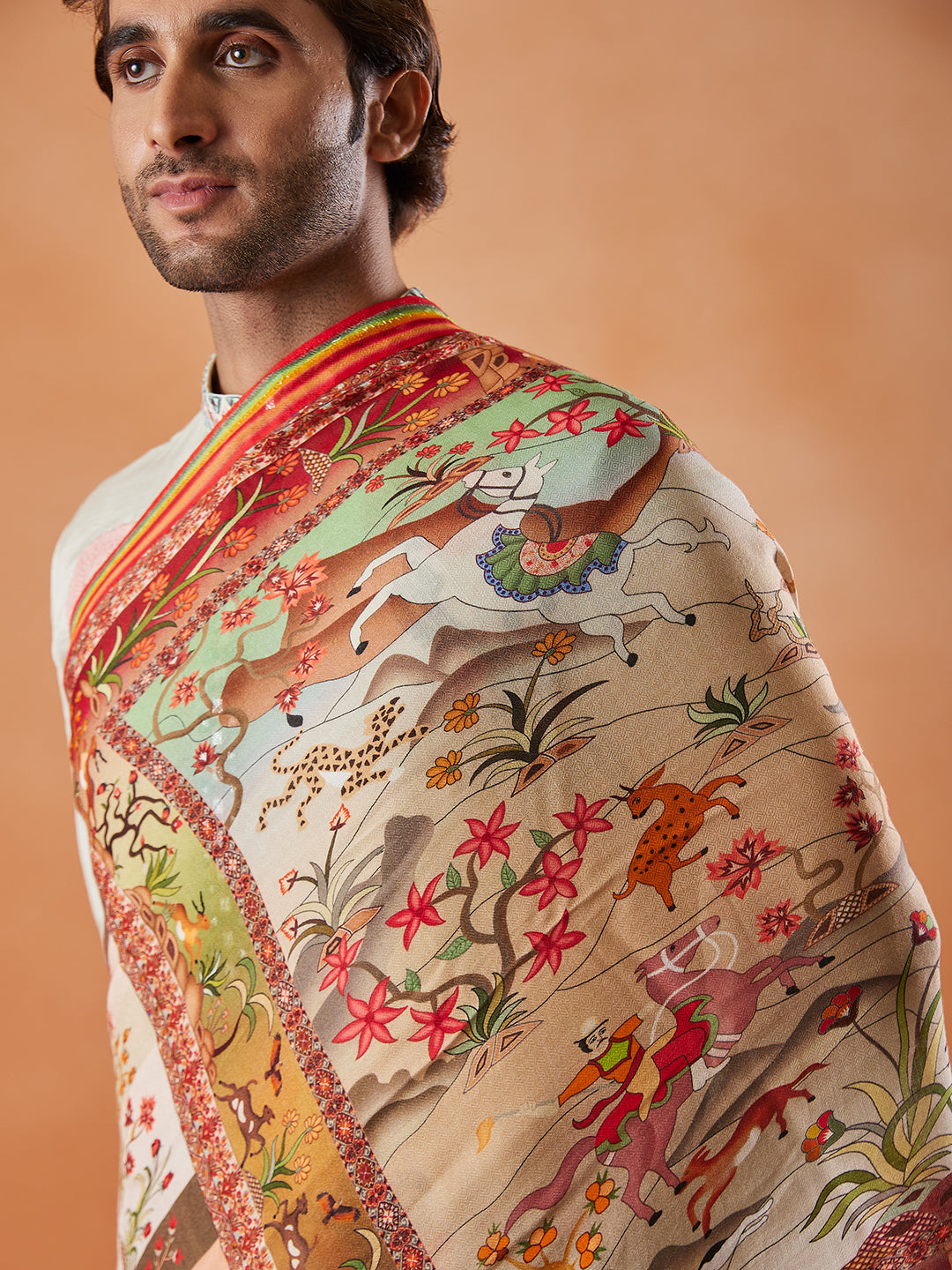
At Pashmoda, the shawl collection reflects this commitment to authenticity and craftsmanship. Each piece is selected for material integrity, softness, and wearable refinement.
When you choose from the Pashmoda shawl collection, you are choosing:
-
Genuine warmth without bulk
-
Carefully crafted Pashmina cloth
-
Timeless designs suited for modern wardrobes
-
Long-term value over seasonal trends
Feel the softness. Experience the insulation. Invest in craftsmanship.
Frequently Asked Questions Before Buying a Kashmiri Pashmina Shawl
1. Is Pashmina warm enough for harsh winters?
Yes. Warm Pashmina provides excellent insulation because the fiber naturally develops in extreme Himalayan climates.
It traps body heat efficiently while remaining lightweight and breathable, making it ideal for both outdoor winter evenings and indoor events.
2. Why is 100% Pashmina more expensive than regular wool?
100% Pashmina is made from a rare, ultra-fine fiber that requires manual sorting, hand-spinning, and slow weaving.
Regular wool is widely available and often machine-processed. The difference in rarity, craftsmanship, and softness directly affects the price.
3. How can I tell if the Pashmina cloth is authentic?
Authentic Pashmina cloth feels exceptionally soft but not slippery, offers warmth without heaviness, and does not appear overly glossy.
Reputable collections, such as Pashmoda’s, clearly state material composition and avoid vague terms like “Pashmina-style” or “blend.”
4. Is a Pashmina shawl worth the investment?
Yes. A genuine Pashmina shawl offers long-term durability, timeless style, and superior warmth-to-weight performance.
Unlike fast-fashion winter accessories, it remains relevant and wearable for years.
5. Where can I buy authentic Pashmina shawls?
You can explore carefully curated, craftsmanship-focused shawls in Pashmoda’s collection linked above.
The collection reflects material integrity, softness, and wearable elegance rather than mass production.
Conclusion
So, is Pashmina warm? Yes, but warmth is only part of the story.
A Kashmiri Pashmina shawl represents rare high-altitude fiber, patient handcrafting, and textile expertise refined over generations.
The price reflects scarcity, skill, and performance - not branding or trends.
When you choose authentic Pashmina cloth, you are investing in:
-
Natural insulation without bulk
-
Softness that improves with time
-
A piece rooted in heritage
-
A winter essential that transcends seasons
Kashmiri shawls are expensive because they are rare, labor-intensive, and built to last. Once you understand the making behind them, the value becomes undeniable.
If you’re ready to experience genuine warmth and craftsmanship, explore Pashmoda’s shawl collection and choose a piece that carries both tradition and refinement into your wardrobe.