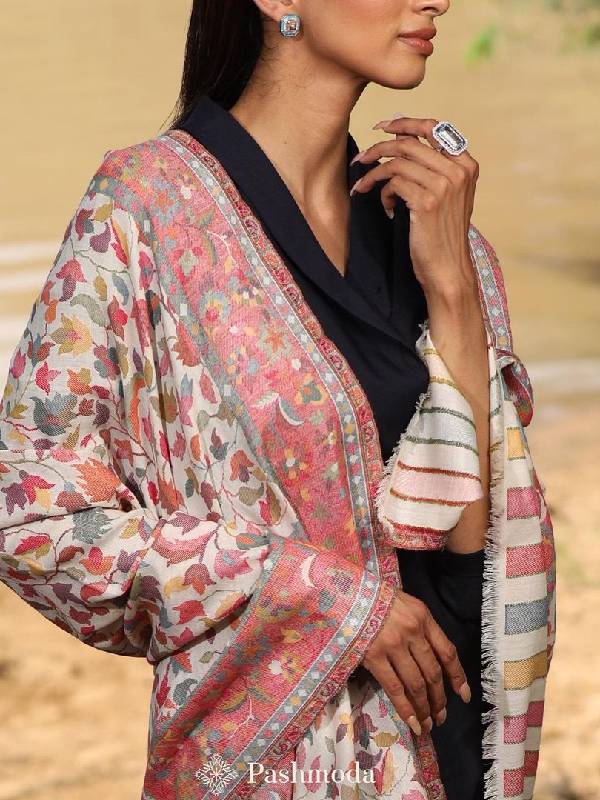

Types of Shawls: A Guide to Styles and Use
Shawls have been worn across cultures for centuries, valued for their versatility, warmth, and understated elegance.
Today, shawls are no longer limited to traditional wear. They are everyday layering pieces, seasonal essentials, and statement accessories for both men and women.
This guide explores the types of shawls, how they differ in material and use, and how to choose the right one based on climate, occasion, and personal style.
Understanding the Different Types of Shawls
The term “shawl” broadly refers to a fabric worn draped over the shoulders, neck, or upper body. However, not all shawls are the same.
Variations in fabric, weave, size, and finish define how a shawl looks, feels, and performs.
The types of shawls and wraps available today can be grouped based on material, seasonality, and styling purpose.
Types of Shawls Based on Fabric
1. Pashmina Shawls
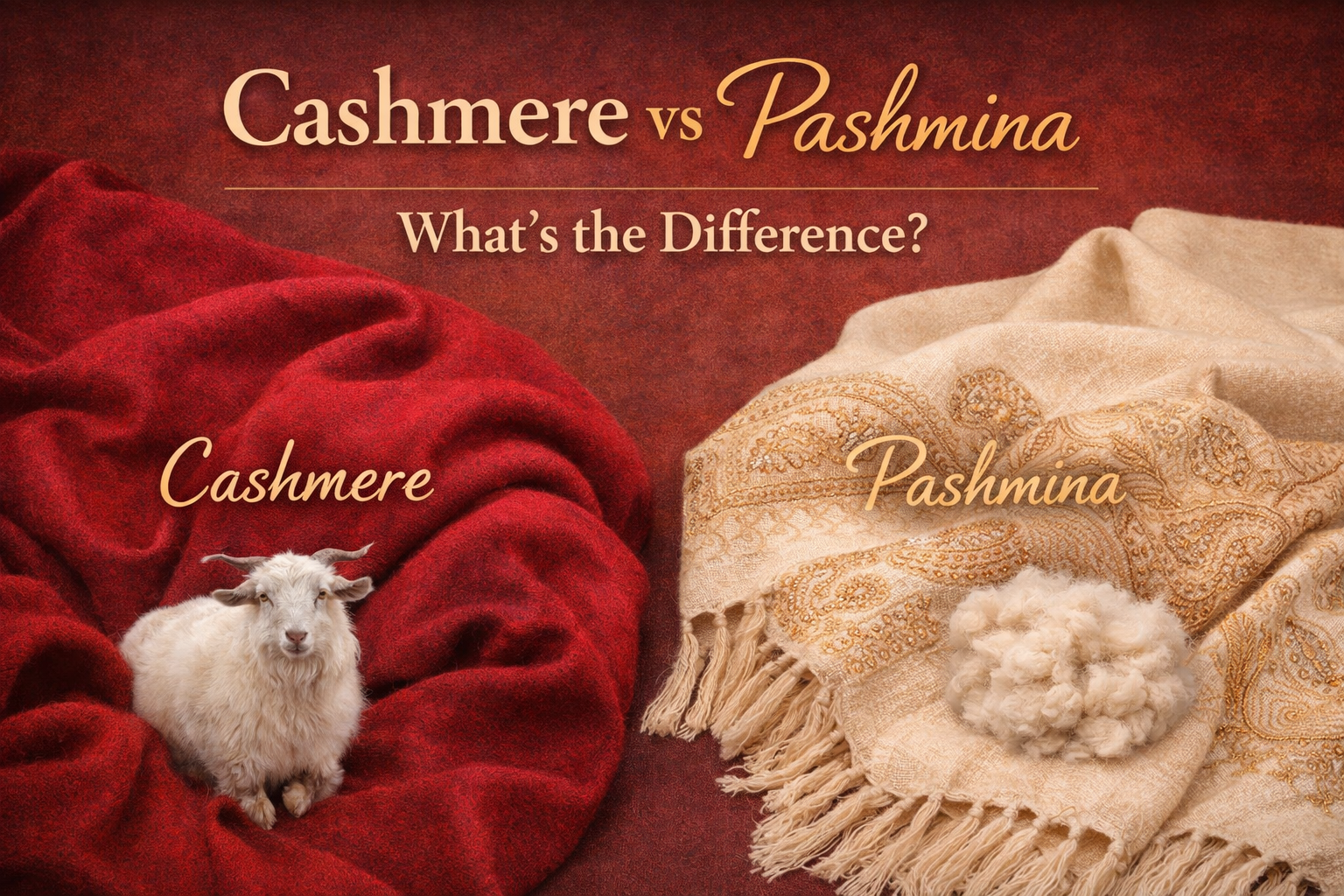
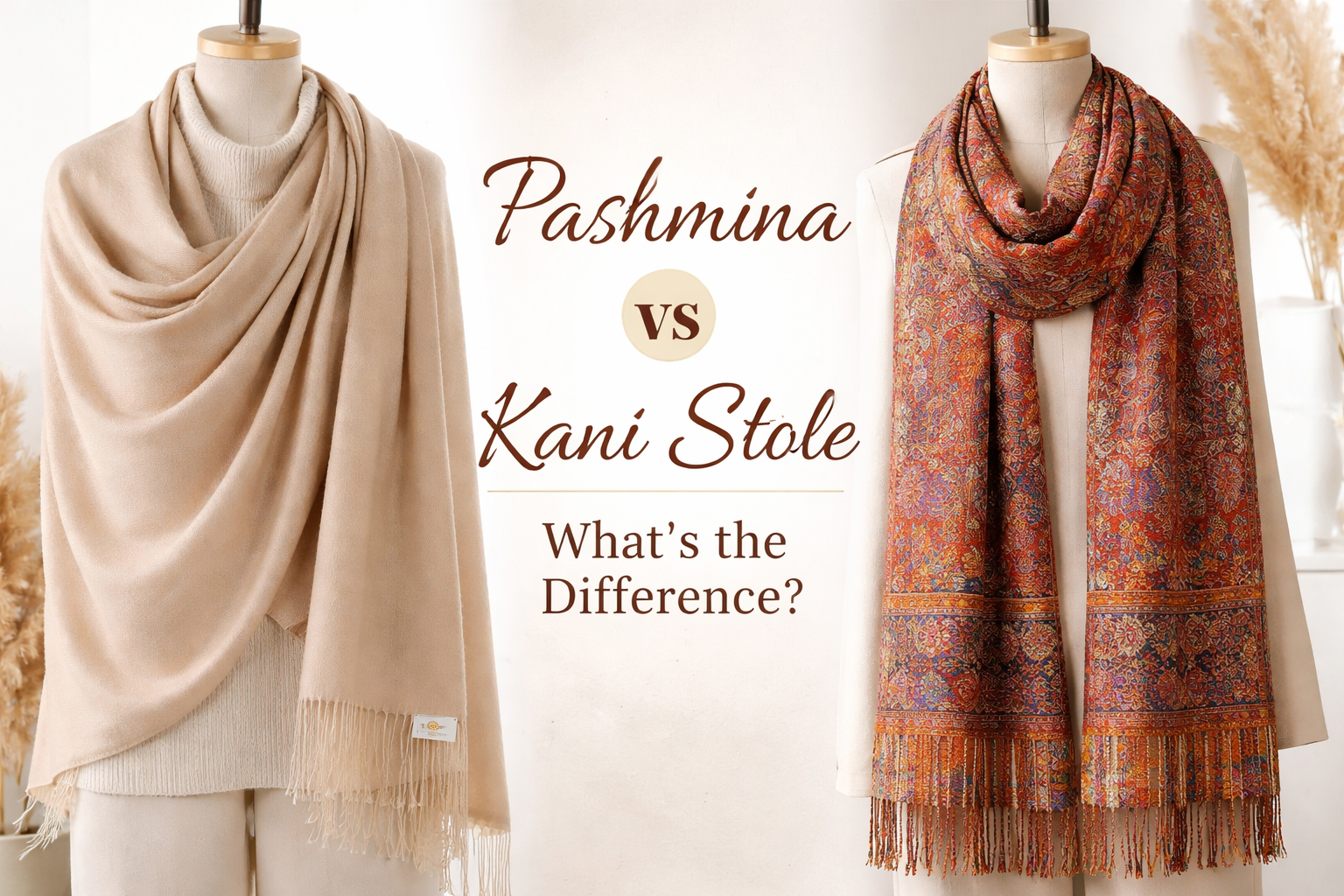
Pashmina shawls are known for their exceptional softness, lightweight warmth, and refined drape.
Made from ultra-fine natural fibers, they are ideal for cooler weather while remaining breathable.
Best used for:
-
Winter layering without bulk
-
Formal and semi-formal outfits
-
Travel due to their light weight
Pashmina shawls are often preferred by those seeking a premium shawl for women or a refined layering option for men.
2. Wool Shawls
Wool shawls offer structured warmth and durability. Compared to Pashmina, they are slightly heavier and better suited for colder climates or outdoor use.
Best used for:
-
Daily winter wear
-
Long hours outdoors
-
Casual or workwear styling
Wool shawls are practical and versatile, making them a staple in colder regions.
3. Silk Shawls
Silk shawls are lightweight, smooth, and naturally glossy. They are primarily decorative rather than insulating.
Best used for:
-
Evening wear
-
Festive occasions
-
Layering over dresses or ethnic outfits
Silk shawls work well when warmth is not the priority but elegance is.
4. Blended Shawls
Blended shawls combine fibers like Pashmina and silk or wool and silk. These blends balance softness, durability, and visual appeal.
Best used for:
-
Transitional seasons
-
Styling-focused outfits
-
Occasions requiring both comfort and structure
Blended shawls are popular for those who want versatility without committing to a single fiber type.
Types of Shawls Based on Style and Construction
1. Classic Rectangular Shawls
Rectangular shawls are the most common and versatile style. They can be draped traditionally, wrapped like a scarf, or styled asymmetrically.
Best used for:
-
Everyday wear
-
Layering over coats or dresses
-
Both men and women
This shape dominates most types of shawls for men due to its clean and adaptable form.
2. Wrap Shawls
Wraps are wider and longer than standard shawls, offering more coverage. They function as both an accessory and a light outer layer.
Best used for:
-
Travel
-
Air-conditioned environments
-
Evening layering
Wraps are a key category within modern types of shawls and wraps, especially for women seeking comfort without structured outerwear.
3. Embellished and Patterned Shawls
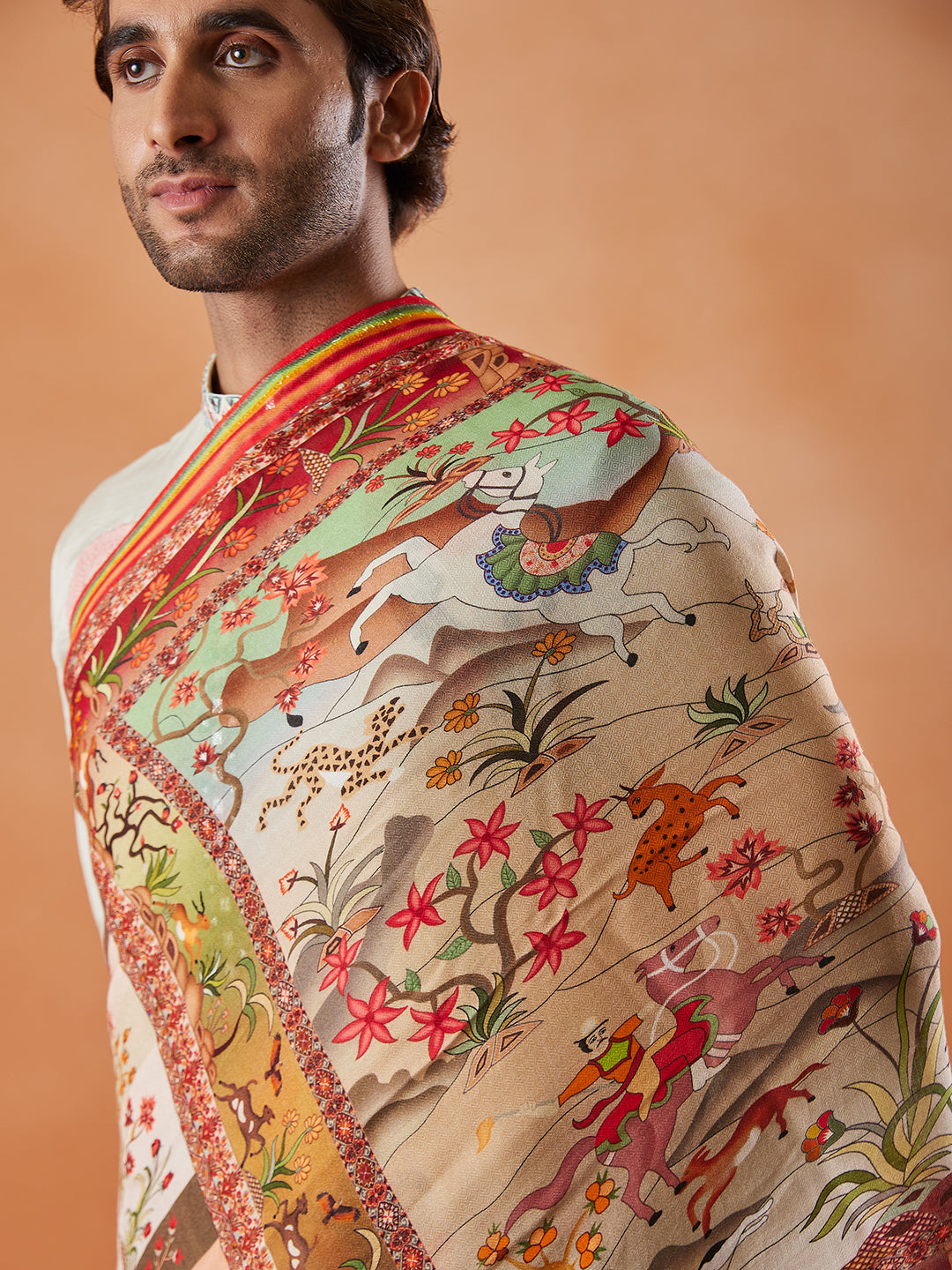
These shawls feature prints, embroidery, or woven patterns. While they may follow classic shapes, their visual identity is stronger.
Best used for:
-
Festive occasions
-
Statement styling
-
Ethnic or fusion outfits
They allow shawls to function as the focal point rather than a supporting layer.
Types of Shawls for Women
When discussing types of shawl for women, styling flexibility is a major factor.
Common preferences include:
-
Lightweight Pashmina shawls for elegance
-
Silk or blended shawls for occasion wear
-
Wrap-style shawls for comfort and coverage
Women’s shawls are often styled over dresses, kurtas, tops, or coats, making fabric choice more important than shape alone.
Types of Shawls for Men
Types of shawls for men emphasize structure, warmth, and subtle design.
Popular options include:
-
Wool or Pashmina shawls in neutral tones
-
Rectangular shawls for easy draping
-
Minimal patterns or solid textures
Men’s shawls are commonly worn with coats, sweaters, or traditional attire, serving both functional and aesthetic purposes.
Seasonal Types of Shawls
Winter Shawls
-
Pashmina
-
Wool
-
Heavier blends
Designed for insulation and prolonged wear.
Transitional Shawls
-
Blended fabrics
-
Medium-weight wraps
Ideal for mild winters and early spring.
Lightweight Shawls
-
Silk
-
Fine blends
Best for indoor use or warmer climates.
Choosing the Right Type of Shawl
When selecting from different types of shawls, consider:
-
Climate and season
-
Frequency of use
-
Styling needs
-
Fabric sensitivity
A well-chosen shawl should complement multiple outfits and serve more than one purpose.
Best Place to Buy a Shawl for Men and Women Online
Pashmoda Shawl Collection
When buying a shawl online, the most important factors are material transparency, versatility of design, and reliability of presentation.
A good online platform should make it easy to compare fabrics, understand usage, and choose a shawl that works equally well for both men and women.
Pashmoda’s shawl collection brings together a curated range of styles suitable for diverse preferences and occasions.
The collection includes lightweight shawls for everyday layering, warmer options for cooler seasons, and refined designs that transition seamlessly between casual and formal wear.
With a focus on fabric clarity and balanced styling, the range caters to both men and women without limiting shawls to a single gender or purpose.
Another advantage of shopping from a dedicated shawl collection is consistency.
Instead of navigating unrelated categories, buyers can explore variations in material, size, and texture in one place, making comparison easier and more informed.
Frequently Asked Questions about Types of Shawls
1. Can the same shawl be worn by both men and women?
Yes. Many shawls are designed to be gender-neutral, especially rectangular and wrap-style shawls.
Neutral colors, classic weaves, and balanced proportions make them suitable for both men and women, with styling depending more on how the shawl is draped than on the design itself.
2. What should I check before buying a shawl online?
Before purchasing a shawl online, check the fabric composition, size, weight, and care instructions.
Clear product descriptions and close-up images of texture and weave help ensure the shawl matches your intended use, whether for warmth, layering, or occasional wear.
3. Are online shawl collections reliable compared to in-store shopping?
Online collections can be just as reliable as in-store shopping when the platform provides transparent material details, accurate visuals, and a focused range of products.
Dedicated shawl collections, like Pashmoda’s, allow buyers to compare styles and fabrics more easily in one place.
Conclusion
Understanding the types of shawls helps simplify buying decisions and ensures the right balance of comfort, function, and style.
Whether chosen for warmth, elegance, or everyday layering, shawls remain one of the most versatile accessories across wardrobes.
By recognizing differences in fabric, structure, and use, selecting the right shawl becomes less about trends and more about long-term value and wearability.