Making of a Pashmina Shawl
When people ask “what is pashmina?”, they are often thinking of softness, warmth, and luxury. But beyond the finished shawl lies a long and intricate journey of craftsmanship.
A genuine Pashmina shawl is not simply manufactured; it is carefully created through a detailed, time-intensive process rooted in tradition.
Understanding what Pashmina is made of, how it is sourced, and how a Pashmina shawl is made reveals why it remains one of the world's most respected textiles.
What Is Pashmina?
At its core, Pashmina refers to a fine type of wool obtained from the undercoat of the Changthangi goat, native to high-altitude regions of Ladakh and surrounding Himalayan areas.
These goats survive in extreme cold and, to protect themselves, grow an exceptionally soft, insulating underlayer of fiber.
This ultra-fine fiber is what defines 100% Pashmina.
Unlike regular wool, Pashmina fibers are:
-
Extremely fine in diameter
-
Naturally lightweight
-
Highly insulating
-
Soft to the touch
When people ask, “what is Pashmina made of?”, the answer is simple. It is made from the naturally shed undercoat of Himalayan goats, carefully separated and processed by skilled artisans.
How is a Pashmina Shawl made: Step-by-step process
Step 1: Collecting the Raw Fiber
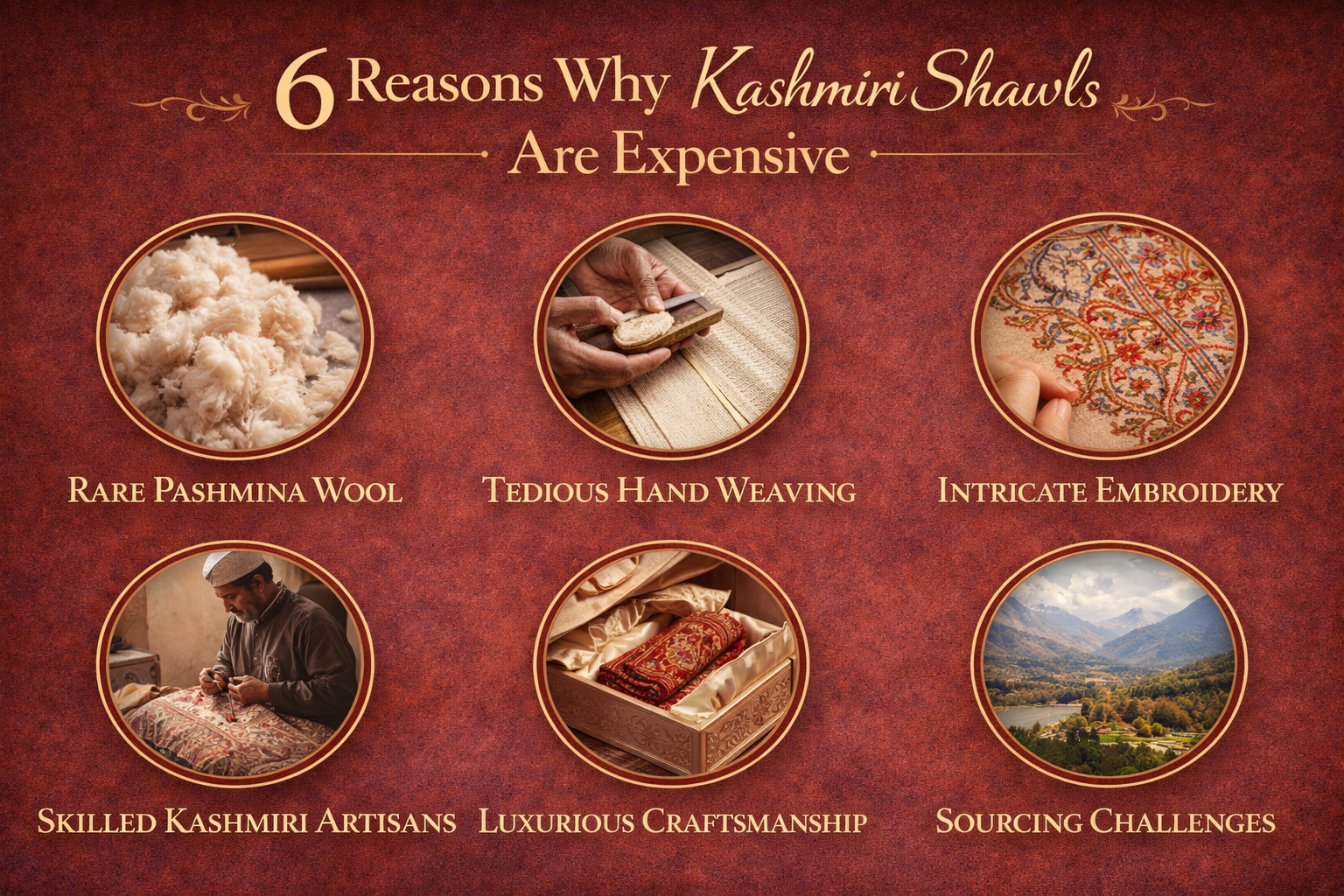
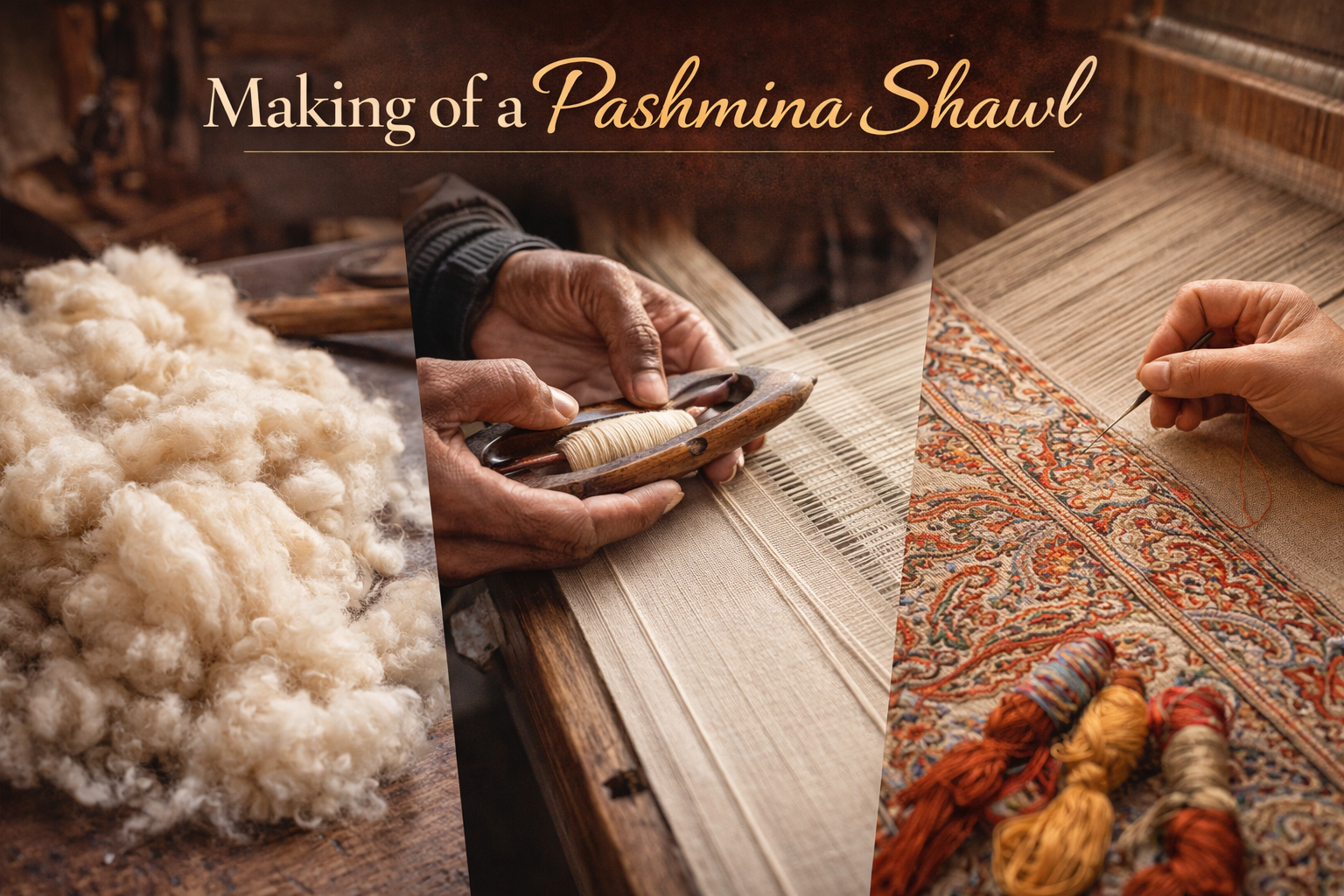
The journey of a Pashmina shawl begins in the mountains. During spring, Changthangi goats naturally shed their winter undercoat. This fiber is collected either by combing or gathering from the environment.
Each goat produces only a small quantity of usable fiber annually. This limited yield contributes to the exclusivity and value of authentic Pashmina.
Once collected, the raw fiber contains coarse guard hairs that must be removed manually. This sorting process is delicate and time-consuming, ensuring that only the finest strands are used in production.
Step 2: Cleaning and Sorting
After collection, the raw Pashmina fiber undergoes thorough cleaning to remove dust and impurities. It is then hand-sorted to separate the fine undercoat from rougher outer fibers.
This stage is critical because it determines the softness and purity of the final product. Only the finest fibers are selected when producing 100% Pashmina shawls.
Step 3: Hand Spinning the Yarn
One of the defining aspects of Pashmina shawl making is hand spinning. Unlike industrial wool production, traditional Pashmina yarn is spun manually using spinning wheels.
Hand spinning preserves the fiber's natural softness. Machine spinning, while faster, can place excessive tension on delicate Pashmina strands.
The result of careful hand spinning is a fine yet durable yarn that retains its natural warmth and breathability.
Step 4: Weaving the Shawl
Once the yarn is prepared, it moves to the weaving stage. This is where the actual Pashmina shawl is made.
Traditional wooden looms are often used, and weaving can take days or even weeks, depending on the complexity of the design.
Plain Pashmina shawls require patience and precision, while intricate patterns such as Kani or detailed motifs demand even more time.
When people ask, “How is a Pashmina shawl made?”
Weaving is the stage where the transformation becomes visible. Fine yarn becomes a structured, elegant textile.
Step 5: Washing and Softening
After weaving, the shawl is washed carefully to enhance its softness. The washing process allows the fibers to settle naturally, creating the smooth drape associated with authentic Pashmina.
Unlike synthetic fabrics, Pashmina becomes softer over time with proper care. This natural aging process adds to its long-term appeal.
Step 6: Finishing and Inspection
The final stage involves trimming, edge finishing, and detailed inspection. Artisans carefully examine each shawl to ensure:
-
Uniform weave
-
Smooth edges
-
Balanced texture
-
No structural flaws
Because Pashmina is delicate, this quality check ensures the finished product meets craftsmanship standards.
Only after these steps does the shawl become ready for use.
Why the Process Matters
Understanding Pashmina shawl making helps explain why authentic Pashmina cannot be mass-produced quickly.
Each stage requires skill, patience, and manual effort.
From fiber collection to final finishing, the process may take weeks. This level of craftsmanship is one reason genuine 100% Pashmina shawls hold lasting value.
The difference between blended wool products and authentic Pashmina lies not only in the material but in the careful production process.
What Makes 100% Pashmina Special?
A 100% Pashmina shawl offers:
-
Lightweight insulation
-
Natural breathability
-
Soft texture
-
Long-term durability
Blended products may replicate softness initially, but pure Pashmina retains its structure and warmth over time.
When evaluating Pashmina products, clarity about composition is essential. Knowing what Pashmina is made of allows buyers to distinguish genuine shawls from synthetic alternatives.
Pashmina is not merely fabric; it represents a tradition passed down through generations of artisans.
The techniques involved in spinning and weaving highlight regional craftsmanship developed over centuries.
Each shawl carries cultural and artistic value beyond its functional use.
Explore Authentic Pashmina at Pashmoda
Pashmoda Shawl Collection
Now that you understand what Pashmina is, what it is made of, and how a Pashmina shawl is made, one thing becomes clear: authentic Pashmina is not ordinary fabric.
It is a rare fiber, hand-spun yarn, slow weaving, and skilled finishing brought together in one timeless piece.
That is exactly what makes a genuine 100% Pashmina shawl worth owning.
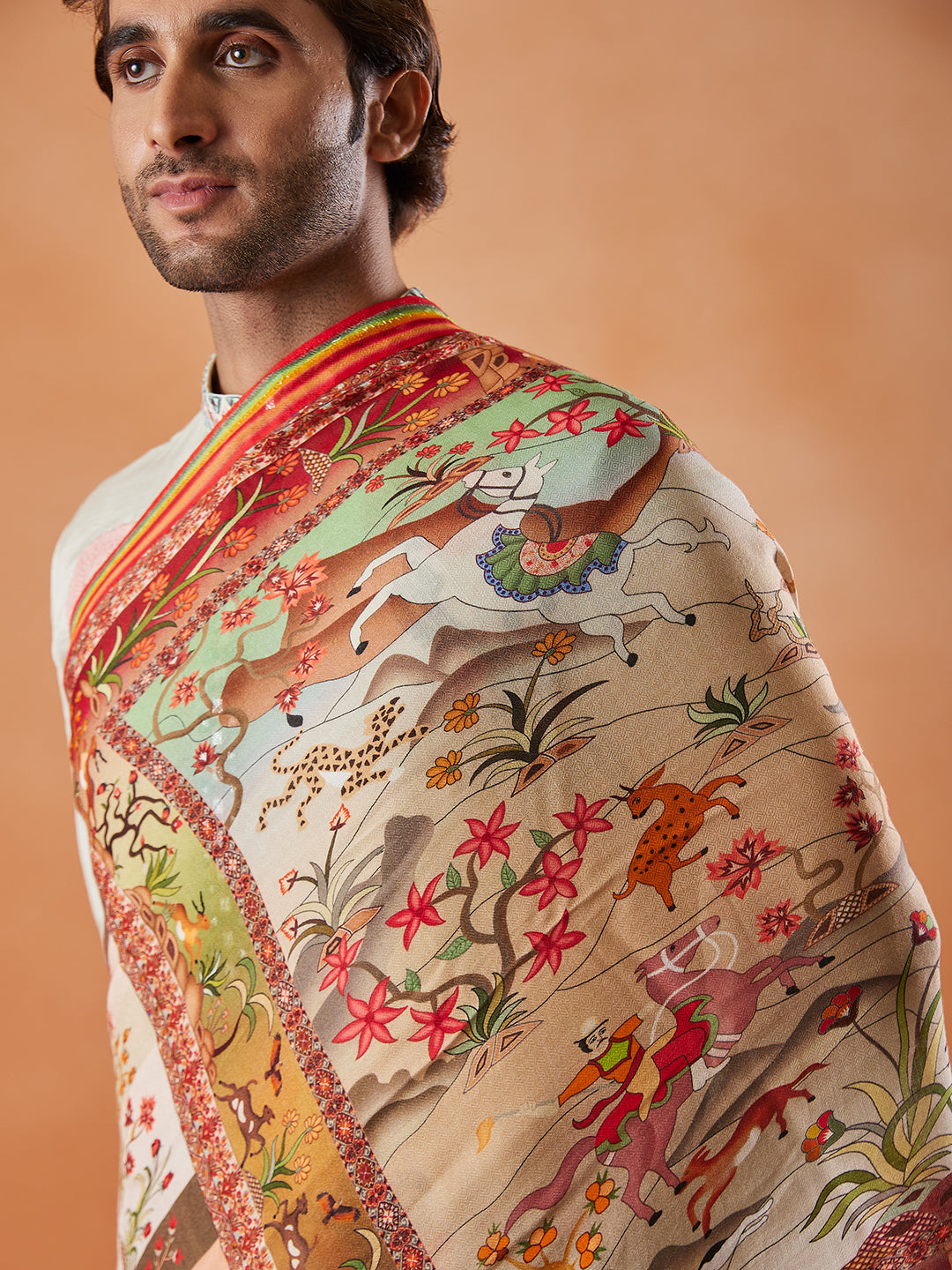
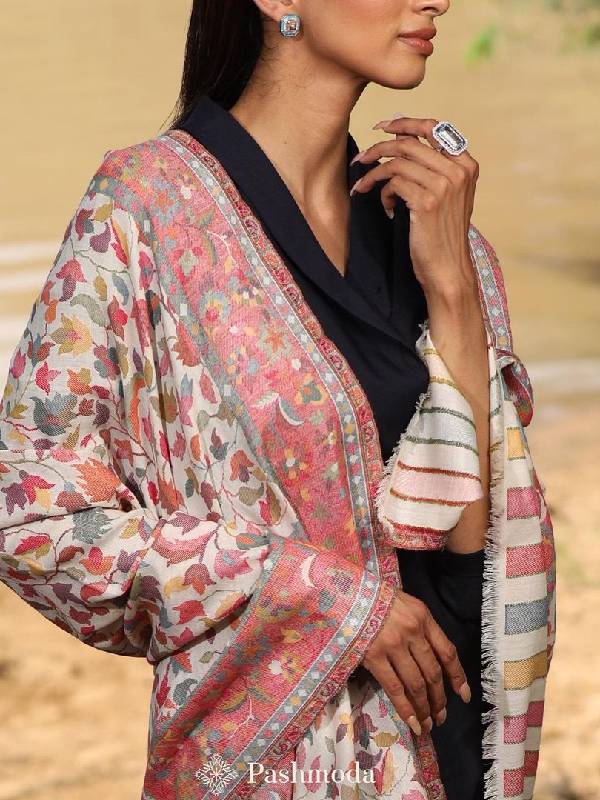
At Pashmoda, the shawl collection reflects this commitment to craftsmanship and material integrity.
Each piece is selected with attention to softness, weave quality, and wearable elegance.
Whether you are looking for a classic plain shawl or a refined statement piece, the collection is built around authenticity and long-term value.
When you invest in a Pashmina shawl, you are choosing:
-
Lightweight warmth without bulk
-
Natural breathability
-
Long-lasting durability
-
A piece that improves with time
-
A textile rooted in heritage
A well-crafted Pashmina shawl is not just seasonal fashion, but a wardrobe investment.
Final Thoughts
So, what is Pashmina? It is the fine undercoat of Himalayan goats, transformed through patient craftsmanship into one of the world’s most respected textiles.
And how is a Pashmina shawl made?
Through a meticulous process of fiber collection, cleaning, hand spinning, weaving, washing, and finishing, each stage requires skill and care.
Understanding the making of a Pashmina shawl deepens appreciation for its softness, warmth, and enduring elegance.
It is not simply a winter accessory. It is the result of heritage, material rarity, and dedicated craftsmanship woven together.