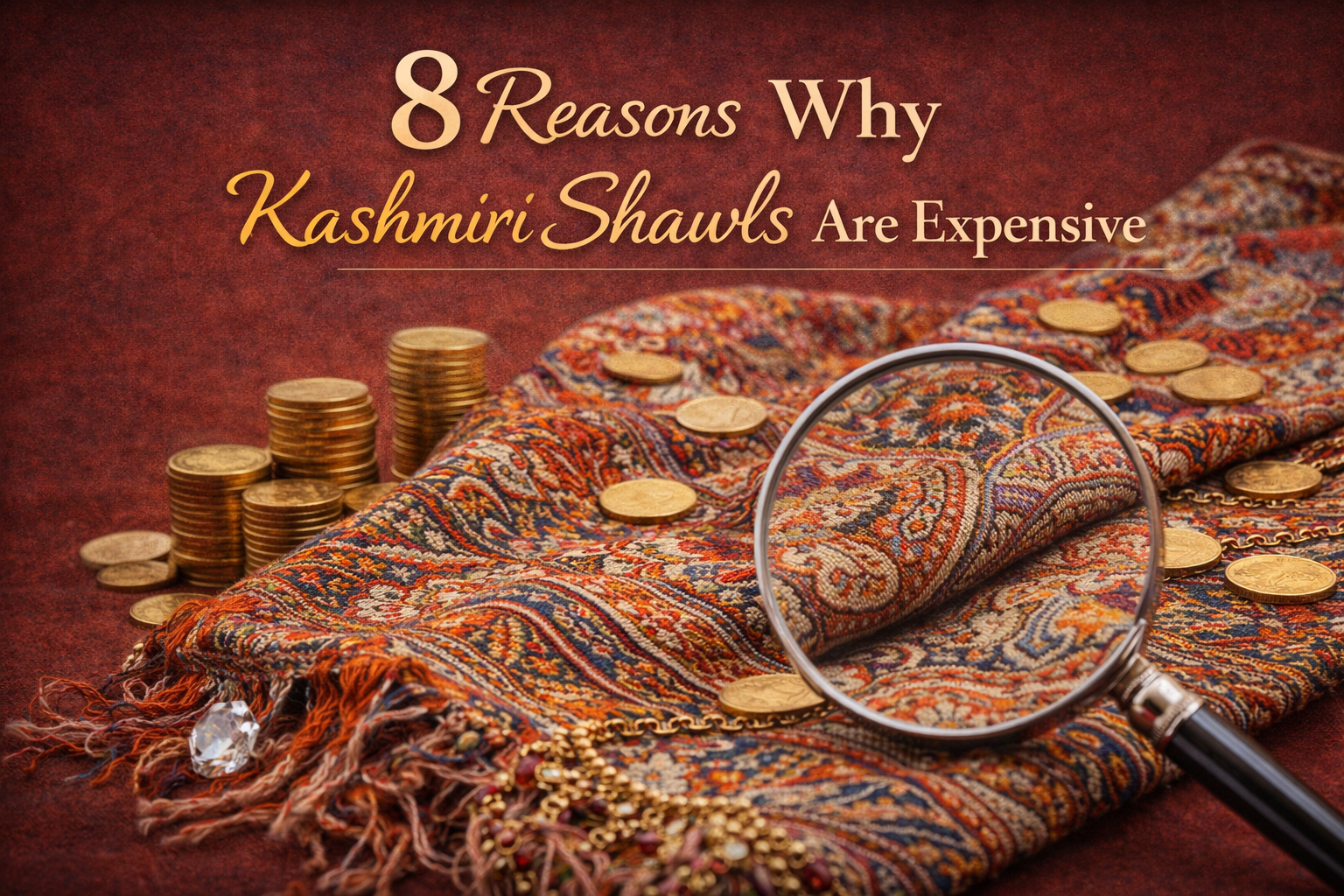
8 Reasons Why Kashmiri Shawls Are Expensive
The question “why are Pashmina shawls expensive?” comes up again and again from savvy shoppers and first-time buyers alike.
The answer isn’t simple price tag math; it’s a mix of scarcity, craftsmanship, culture, and heritage that combines to make a Pashmina Kashmiri shawl one of the most coveted textiles in the world.
In this guide, we explore the key reasons behind the cost, what contributes to the cost of a Pashmina shawl, and why investing in an authentic piece has long-term value.
Genuine Reasons as to Why Kashmiri Shawls Are Expensive
1. Rare and Precious Raw Material
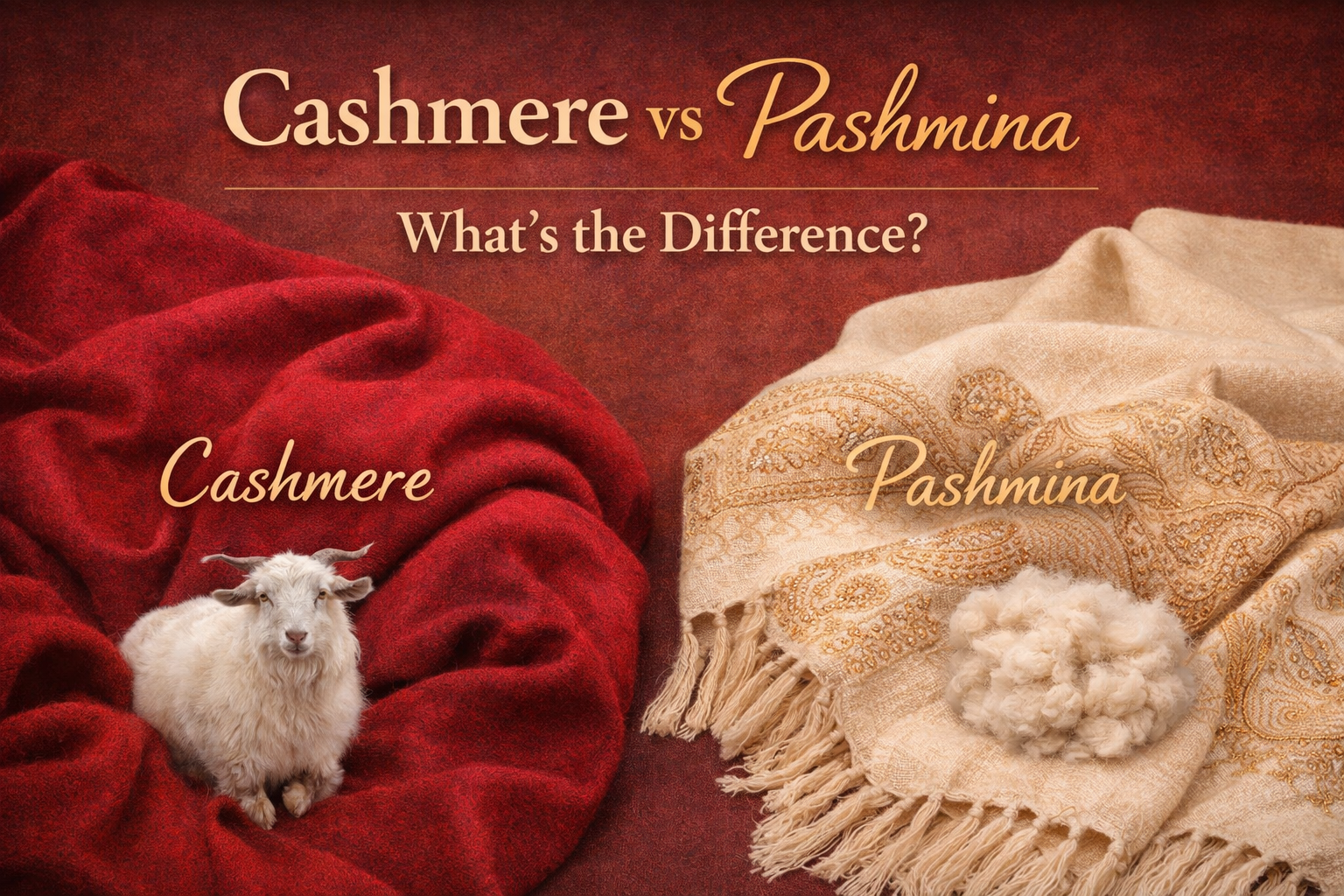
Pashmina wool comes from the fine undercoat of the Changthangi goat, native to the harsh high-altitude regions of Ladakh and Kashmir.
These goats survive in extreme cold and naturally develop wool that is exceptionally soft, fine, and insulating. The sheer rarity of this raw fibre is one of the most fundamental reasons Pashmina shawls are expensive.
Each goat yields only a small amount of usable fibre per year. The softest, most desirable part must be separated by hand from coarser hairs.
This limits the raw material supply and contributes directly to higher costs.
2. Labor-Intensive Handcrafting
A true Kashmiri Pashmina shawl isn’t just fabric, it’s artwork created by skilled hands.
After raw wool is collected, it must be thoroughly cleaned, hand-carded, and hand-spun into fine yarn.
The weaving process alone can take weeks, even months, depending on the intricacy. Many traditional shawls use age-old techniques such as Kani, Sozni, or Tilla embroidery, which demand intense focus and precision.
This human involvement at every stage, with no shortcuts, is a direct contributor to why Pashmina shawls are expensive.
3. Limited Annual Production
Because the wool can only be collected from the goats during specific seasonal shedding, the total amount of Pashmina available each year is limited.
This scarcity naturally drives prices higher, especially for high-grade, 100% pure Pashmina shawls that are not blended or synthetically enhanced.
Unlike mass-produced fabrics, there is no way to rapidly increase supply.
4. Exceptional Softness and Insulation
Authentic Pashmina feels significantly softer and warmer than standard wool or blended cashmere because of the fibre’s fine diameter and natural properties.
It offers high insulation without bulk, something machine-made alternatives can’t replicate.
This combination of feather-light comfort and weightless warmth is part of what buyers are paying for.
5. Cultural Heritage and Artistic Value
Pashmina shawls have been woven and worn for centuries, particularly in Kashmir, where they have cultural and historical significance.
The traditional weaving styles and design motifs are part of a living heritage, passed down through generations.
This isn’t just clothing, it’s a textile tradition with deep roots, and the expertise preserved in every shawl adds intangible yet real value.
6. Time and Skill: High Cost Per Piece
The time it takes to make a single shawl, from sifting raw fibre to weaving and finishing, elevates the cost. In some cases, more elaborate embroidered or patterned shawls can take even longer to complete.
Each hour spent by an artisan is a cost that factory-made shawls simply don’t incur.
It’s one reason why a genuine piece commands a much higher price than mass-produced accessories.
7. Ethical and Sustainable Production
Many authentic Pashmina producers ensure fair wages and ethical working conditions for their artisans.
This commitment to ethical production, supporting traditional communities, and maintaining craftsmanship is reflected in prices, too.
Cheap imitations often cut corners with synthetic blends or factory mechanisation, but authentic hand-crafted Pashmina carries the cost of fairness and sustainability.
8. Investment-Worthy Quality
A genuine Pashmina shawl can last decades, often becoming a family heirloom. Its softness and quality can improve with proper care, unlike cheaper alternatives that degrade quickly.
That longevity is part of the reason people view the cost of Pashmina shawl not just as an expense, but as an investment.
Best Place to Buy Kashmiri Shawls Online
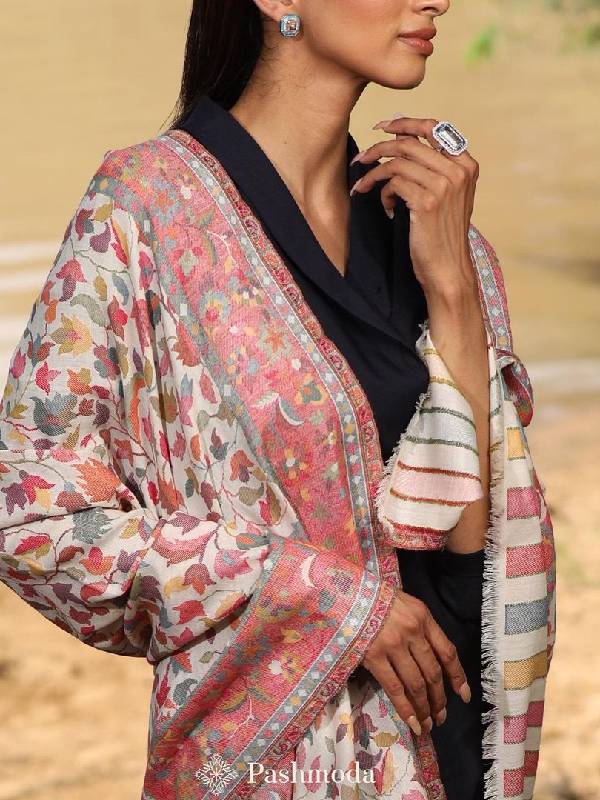
Pashmoda’s Kashmiri Shawl Collection
If you’re convinced about the craftsmanship behind a genuine Pashmina shawl and want a trusted collection to explore, consider the curated range at Pashmoda.
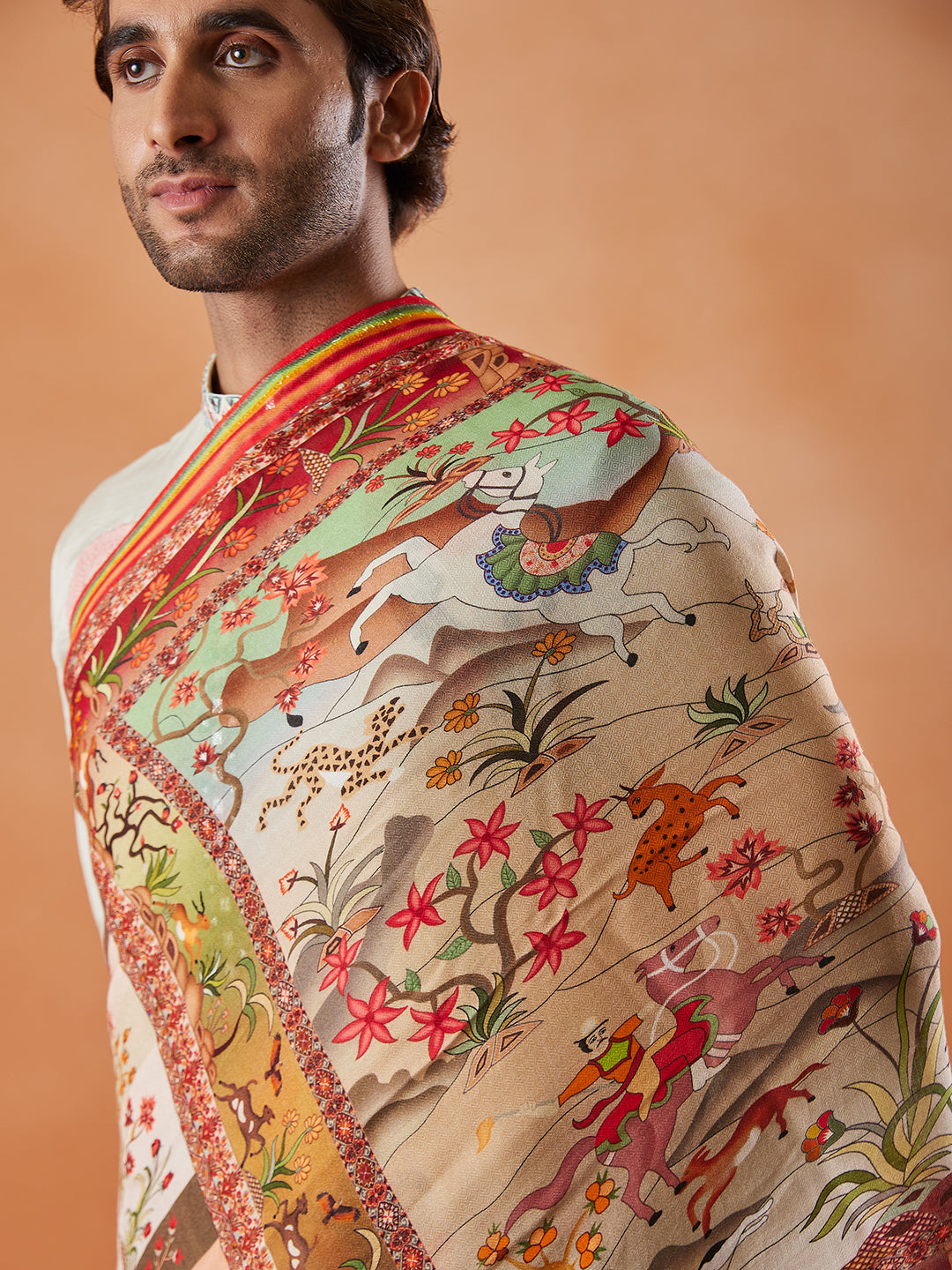
Pashmoda’s shawl collection includes a variety of designs and materials, with a special focus on premium Kashmiri-inspired Pashmina shawls and other fine wool options.
Each listing provides clear material details, helping you make informed decisions based on fabric, weave, weight, and style.
From classic pure wool and finely woven shawls to intricately patterned and season-ready options, the collection is designed for both men and women who appreciate quality and heritage in their wardrobe choices.
FAQs About Kashmiri Shawls
Why are Pashmina shawls expensive compared to regular shawls?
Pashmina uses rare, fine fibres from the undercoat of Changthangi goats and involves meticulous hand-spinning and weaving processes that cannot be mechanised. This rarity and craftsmanship are key reasons behind higher prices.
Is Pashmina always expensive?
Pure, authentic Pashmina tends to be expensive due to its rarity and production methods. However, blended or machine-made products marketed under the same name can be cheaper but lack the true qualities of genuine Pashmina.
How much does a real Pashmina shawl typically cost?
The price of an authentic Pashmina shawl varies widely based on fibre quality, weave type, and design complexity, but it generally commands a premium compared to standard shawls due to its fine material and artisanal production.
Does embroidery or design affect the price of Pashmina shawls?
Yes. Shawls with intricate embroidery or traditional designs (such as Sozni or Kani work) require additional artisan time and skill, which increases both craftsmanship value and the final price.
Conclusion
Understanding why Pashmina shawls are expensive helps you appreciate that the price tag reflects countless hours of labor, rare materials, cultural value, and enduring quality not just fabric.
Whether chosen as a functional winter staple or a timeless accessory, a genuine Pashmina is far more than a typical shawl.